

There’s Something Special About a Bowl of Homemade Fried Rice
Have you ever opened the refrigerator, spotted a container of leftover rice, and wondered what to do with it? Instead of letting it go to waste, you can transform it into a flavorful meal that tastes just as good—if not better—than your favorite takeout.
Fried Rice is one of those timeless recipes that proves simple ingredients can create incredible results. With fluffy rice, crisp vegetables, savory seasonings, and your choice of protein, it’s a meal that’s quick enough for busy weeknights yet satisfying enough to serve family and friends.
The best part? You don’t need professional cooking skills or expensive ingredients. Once you understand a few essential techniques, you’ll be able to make restaurant-quality fried rice in your own kitchen whenever the craving strikes.
In this complete guide, you’ll discover everything you need to know—from choosing the right rice to mastering the perfect stir-fry technique—so every bowl comes out delicious.
What Is Fried Rice?
Fried Rice is a popular stir-fried rice dish that originated in China centuries ago as a practical way to use leftover cooked rice. Rather than throwing away extra rice, home cooks combined it with vegetables, eggs, meat, and flavorful sauces to create a satisfying meal.
Today, fried rice has become one of the world’s most loved comfort foods. Every country has added its own twist, making it incredibly versatile.
Some of the most popular variations include:
- Chicken Fried Rice
- Shrimp Fried Rice
- Vegetable Fried Rice
- Egg Fried Rice
- Beef Fried Rice
- Kimchi Fried Rice
- Thai Pineapple Fried Rice
- Garlic Fried Rice
- Seafood Fried Rice
Despite these differences, the foundation remains the same: cooked rice, high heat, fresh ingredients, and balanced seasoning.
Why You’ll Love This Homemade Fried Rice Recipe
Once you make fried rice from scratch, you’ll wonder why you ever ordered takeout.
Here’s why this recipe deserves a place in your weekly meal plan.
- Ready in less than 30 minutes
- Great for using leftover rice
- Budget-friendly
- Easily customizable
- Packed with fresh vegetables
- Perfect for meal prep
- Family-friendly
- One-pan cleanup
- Better than takeout
- Beginner-friendly
Whether you’re cooking for one person or feeding an entire family, fried rice adapts beautifully to whatever ingredients you already have on hand.
Ingredients for the Best Fried Rice
One reason fried rice is so popular is that it relies on simple pantry staples. Each ingredient contributes something unique, whether it’s texture, aroma, or flavor.
Essential Ingredients
| Ingredient | Amount | Purpose |
|---|---|---|
| Cold cooked rice | 4 cups | Creates fluffy fried rice |
| Eggs | 2 large | Adds richness and protein |
| Vegetable oil | 2 tablespoons | High-heat cooking |
| Sesame oil | 1 tablespoon | Nutty aroma |
| Soy sauce | 3 tablespoons | Savory flavor |
| Garlic | 3 cloves, minced | Bold flavor |
| Onion | 1 small, diced | Natural sweetness |
| Carrots | ½ cup, diced | Color and crunch |
| Frozen peas | ½ cup | Sweetness and texture |
| Green onions | 3, sliced | Fresh garnish |
| Black pepper | To taste | Mild heat |
Optional Add-Ins
One of the greatest things about fried rice is how easily you can make it your own.
Popular additions include:
Proteins
- Chicken
- Shrimp
- Steak
- Ground pork
- Ham
- Bacon
- Tofu
- Salmon
Vegetables
- Corn
- Bell peppers
- Mushrooms
- Broccoli
- Zucchini
- Edamame
- Spinach
- Cabbage
Extra Flavor
- Oyster sauce
- Chili garlic sauce
- Sriracha
- Fish sauce
- Fresh ginger
- Red pepper flakes
- Sesame seeds
Feel free to mix and match based on your preferences or whatever is already in your refrigerator.
The Secret to Perfect Fried Rice
The difference between average fried rice and unforgettable fried rice comes down to technique rather than complicated ingredients.
Let’s break down the secrets professional chefs rely on.
Why Day-Old Rice Works Best
This is the number one rule of making fried rice.
Freshly cooked rice contains a lot of moisture. When fried immediately, it tends to stick together and become soft or mushy.
Day-old rice, however, has had time to dry slightly in the refrigerator. That means every grain stays separate when stir-fried, creating the light, fluffy texture people associate with restaurant-quality fried rice.
If you don’t have leftover rice, spread freshly cooked rice on a baking sheet and refrigerate it for at least one to two hours before cooking.
Choosing the Best Rice
Not every type of rice performs the same in a hot pan.
Here are the best options.
Jasmine Rice
- Light
- Fragrant
- Fluffy
- Excellent for classic fried rice
Long-Grain White Rice
- Separate grains
- Doesn’t clump
- Easy to stir-fry
Brown Rice
- Higher in fiber
- Slightly nutty flavor
- Healthier alternative
Basmati Rice
- Long grains
- Light texture
- Less traditional but delicious
Avoid overly sticky rice varieties if your goal is restaurant-style texture.
High Heat Makes a Huge Difference
One mistake many home cooks make is using medium or low heat.
Fried rice cooks best over high heat because it:
- Creates slight caramelization
- Prevents sogginess
- Helps vegetables stay crisp
- Develops deeper flavor
- Gives rice a lightly toasted finish
If possible, use a wok. Its curved shape allows food to cook quickly while distributing heat evenly.
Don’t worry if you only have a large skillet—it can still produce fantastic results.
Use the Right Oil
Because fried rice cooks quickly at high temperatures, you’ll want an oil with a high smoke point.
Great choices include:
- Vegetable oil
- Canola oil
- Peanut oil
- Avocado oil
Finish the dish with a drizzle of sesame oil after cooking rather than using it for frying. This preserves its rich, nutty flavor.
Prepare Everything Before You Start
Fried rice comes together quickly.
That means there’s no time to chop vegetables once the pan is hot.
Before turning on the stove, have everything ready:
- Rice separated
- Vegetables chopped
- Eggs beaten
- Sauces measured
- Protein cooked if necessary
This preparation method, often called mise en place, helps everything cook evenly and keeps ingredients from overcooking while you search for the next item.
Kitchen Equipment You’ll Need
You don’t need specialized equipment to make excellent fried rice, but a few tools will make the process easier.
Essential Tools
- Large wok or skillet
- Wooden spoon or spatula
- Sharp chef’s knife
- Cutting board
- Mixing bowls
- Measuring spoons
- Measuring cups
Helpful Extras
- Rice cooker
- Garlic press
- Fine grater for fresh ginger
- Small prep bowls for sauces
A large cooking surface is especially important because overcrowding the pan traps steam instead of allowing ingredients to fry.
Why Homemade Fried Rice Is Better Than Takeout
Restaurant fried rice is undeniably delicious, but making it at home gives you several advantages.
You Control the Ingredients
You decide how much oil, sodium, vegetables, and protein go into your meal.
It’s More Affordable
A few basic ingredients can feed an entire family for a fraction of the cost of ordering takeout.
You Can Make It Healthier
Add more vegetables, lean proteins, or swap white rice for brown rice to create a balanced meal.
Endless Customization
Unlike restaurant menus, your kitchen has no limits.
Prefer extra garlic?
Add it.
Love spicy food?
Mix in chili crisp or sriracha.
Trying to eat more vegetables?
Double the carrots, peas, mushrooms, and broccoli.
Every batch can be completely different.
Making perfect fried rice starts long before the pan hits the heat—it begins with choosing the right ingredients, preparing them properly, and understanding a few simple techniques that make all the difference.
Easy Step-by-Step Guide to Making Fried Rice
Now that you’ve gathered your ingredients and learned the secrets behind fluffy, flavorful fried rice, it’s time to start cooking. This recipe comes together quickly, so having everything prepped before you turn on the stove will make the process smooth and enjoyable.
Step 1: Prepare All Your Ingredients
Before heating the pan, organize everything you’ll need.
- Break up any clumps in the cold rice with your hands or a fork.
- Dice the onion and carrots into small, even pieces.
- Mince the garlic.
- Slice the green onions.
- Beat the eggs in a small bowl.
- Measure the soy sauce and sesame oil.
- If using chicken, shrimp, beef, or another protein, cook it first and set it aside.
Having everything ready ensures each ingredient cooks perfectly without burning.
Step 2: Heat the Pan
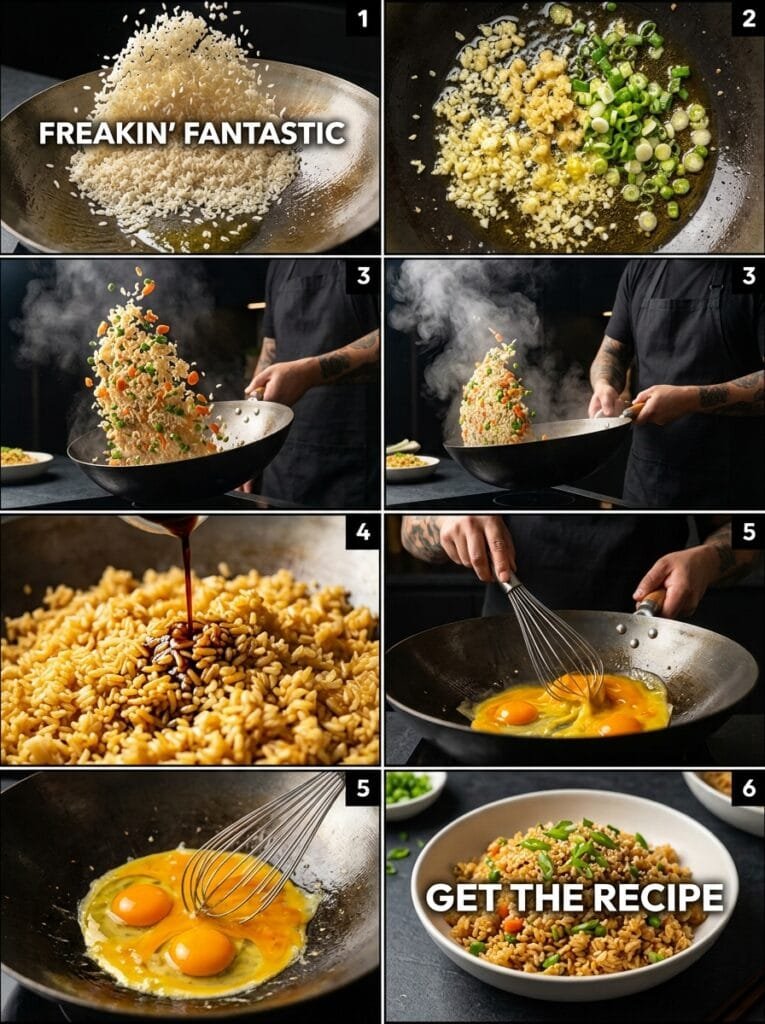
Place a large wok or skillet over high heat.
Once it’s hot, add the vegetable oil and swirl it around the pan.
A properly heated pan helps create that lightly toasted flavor found in restaurant-style fried rice.
Tip: If the oil begins to shimmer, the pan is ready.
Step 3: Cook the Eggs
Pour the beaten eggs into the hot pan.
Allow them to cook for about 20 to 30 seconds before gently scrambling them into soft pieces.
Once cooked, transfer the eggs to a clean plate.
Cooking the eggs separately keeps them tender instead of overcooked.
Step 4: Sauté the Vegetables
Add a little more oil if needed.
Cook the following ingredients:
- Onion
- Garlic
- Carrots
Stir-fry for about 2 to 3 minutes until the vegetables begin to soften.
Add the peas during the final minute since they cook quickly.
The vegetables should remain slightly crisp for the best texture.
Step 5: Add the Rice
Increase the heat if necessary.
Add the cold rice and immediately begin breaking apart any remaining clumps with your spatula.
Spread the rice across the pan and let it cook for about 20 seconds before stirring.
This allows some of the grains to develop a lightly crisp exterior.
Continue tossing the rice until it’s heated through.
Step 6: Add the Seasonings
Pour the soy sauce evenly around the edges of the pan rather than directly onto the rice.
Then drizzle in the sesame oil.
Season with:
- Black pepper
- Optional white pepper
- A pinch of salt if needed
Mix everything until the rice is evenly coated without becoming overly dark.
Remember that soy sauce is naturally salty, so taste before adding more seasoning.
Step 7: Add the Eggs and Protein
Return the scrambled eggs to the pan.
If you’re using cooked chicken, shrimp, beef, tofu, or another protein, add it now.
Stir everything together until evenly distributed.
Cook for another minute to allow the flavors to combine.
Step 8: Finish with Fresh Garnishes
Turn off the heat.
Add:
- Sliced green onions
- Sesame seeds
- Fresh cilantro (optional)
- Chili crisp (optional)
Serve immediately while the fried rice is hot and fluffy.
Common Mistakes That Ruin Fried Rice
Even experienced home cooks occasionally make mistakes that affect the final dish. Avoid these common problems to ensure perfect results every time.
Using Freshly Cooked Rice
Fresh rice contains too much moisture and often turns soft or sticky when fried.
Solution: Use rice that’s been refrigerated for at least several hours, preferably overnight.
Overcrowding the Pan
Adding too much rice at once lowers the temperature of the pan.
Instead of frying, the rice begins to steam.
Solution: Cook in batches if you’re making a large quantity.
Cooking Over Low Heat
High heat is essential for developing flavor and preventing soggy rice.
Solution: Let the pan become very hot before adding ingredients.
Adding Too Much Soy Sauce
While soy sauce provides wonderful flavor, too much can make fried rice overly salty and wet.
Solution: Start with a small amount and adjust after tasting.
Stirring Constantly
Many people think fried rice should be stirred nonstop.
In reality, allowing the rice to sit briefly against the hot pan creates a lightly toasted texture.
Solution: Stir occasionally rather than continuously.
Overcooking the Vegetables
Vegetables should remain colorful and slightly crisp.
Overcooked vegetables lose both flavor and texture.
Solution: Cook vegetables only until they’re tender-crisp.
Forgetting to Taste Before Serving
Seasonings vary from one soy sauce brand to another.
Always taste your fried rice before serving.
Sometimes it only needs a squeeze of lime or a little black pepper rather than extra salt.
Pro Tips for Restaurant-Style Fried Rice
Want your homemade fried rice to rival your favorite restaurant? These chef-inspired techniques make all the difference.
Use a Wok if Possible
The curved sides of a wok distribute heat evenly and allow ingredients to cook quickly.
Keep Everything Moving
Once the rice goes into the pan, keep it tossing so nothing burns while still allowing brief contact with the hot surface.
Cook Ingredients Separately
Cooking eggs and proteins first prevents overcrowding and keeps every ingredient at its ideal texture.
Don’t Skip Sesame Oil
A small drizzle at the end adds an unmistakable aroma that’s difficult to achieve any other way.
Use Fresh Garlic
Freshly minced garlic delivers much more flavor than garlic powder.
Finish with Green Onions
Adding green onions after cooking preserves their fresh taste and vibrant color.
Delicious Fried Rice Variations
One recipe can become dozens of different meals simply by changing a few ingredients.
Chicken Fried Rice
Tender chicken breast or chicken thighs combine beautifully with eggs, peas, carrots, and soy sauce.
Perfect for:
- Family dinners
- Meal prep
- Leftover rotisserie chicken
Shrimp Fried Rice
Shrimp cooks in just a few minutes and adds a naturally sweet seafood flavor.
Pair with:
- Garlic
- Ginger
- Green onions
- Sesame oil
Vegetable Fried Rice
A colorful vegetarian option loaded with:
- Broccoli
- Mushrooms
- Bell peppers
- Corn
- Snap peas
- Edamame
For additional protein, add tofu.
Beef Fried Rice
Thinly sliced steak creates a hearty, satisfying meal.
Use:
- Flank steak
- Sirloin
- Ribeye
Season with soy sauce and a little oyster sauce for deeper flavor.
Bacon Fried Rice
Crispy bacon adds smoky richness.
The rendered bacon fat also creates incredible flavor when used for frying the rice.
Kimchi Fried Rice
A Korean-inspired version featuring:
- Chopped kimchi
- Gochujang
- Fried egg
- Sesame seeds
Perfect for spice lovers.
Pineapple Fried Rice
Sweet pineapple balances savory soy sauce beautifully.
Add:
- Cashews
- Shrimp
- Curry powder
- Cilantro
This tropical version is both colorful and refreshing.
What to Serve with Fried Rice
Fried rice can stand alone as a complete meal, but it’s also an excellent side dish.
Here are some delicious pairings.
Appetizers
- Spring rolls
- Egg rolls
- Crab rangoon
- Dumplings
- Steamed edamame
Main Dishes
- Teriyaki chicken
- Orange chicken
- Sweet and sour chicken
- Honey garlic salmon
- Beef stir-fry
- Grilled shrimp
- Sesame chicken
Soups
- Miso soup
- Egg drop soup
- Hot and sour soup
- Wonton soup
Fresh Side Dishes
- Asian cucumber salad
- Stir-fried bok choy
- Garlic green beans
- Sesame broccoli
Adding a fresh vegetable side creates a balanced and colorful meal.
With these techniques, your homemade fried rice will be packed with flavor, perfectly textured, and worthy of any restaurant menu.
Storage, Nutrition, FAQs & Conclusion
How to Store and Reheat Fried Rice
Refrigerate
Store leftover Fried Rice in an airtight container in the refrigerator for up to 4 days.
Freeze
Freeze in freezer-safe containers or bags for up to 3 months.
Reheat
- Skillet: Heat over medium-high with a splash of water or oil for 3–5 minutes.
- Microwave: Cover and heat in 30-second intervals, stirring between each.
- Air Fryer: Reheat at 350°F (175°C) for 3–5 minutes.
Fried Rice Nutrition (Approximate Per Serving)
| Nutrient | Amount |
|---|---|
| Calories | 320 |
| Protein | 10g |
| Carbohydrates | 42g |
| Fat | 12g |
| Fiber | 3g |
| Sugar | 4g |
| Sodium | 620mg |
Nutrition values will vary depending on the ingredients and protein you use.
Frequently Asked Questions About Fried Rice
Can I make Fried Rice with freshly cooked rice?
Yes, but chilled day-old rice gives the best texture.
What is the best rice for Fried Rice?
Jasmine rice and long-grain white rice are the best choices.
Why is my Fried Rice mushy?
It’s usually caused by using fresh rice, too much sauce, or cooking over low heat.
Can I freeze Fried Rice?
Yes. Freeze for up to 3 months in airtight containers.
How long does Fried Rice last in the refrigerator?
Up to 4 days when properly stored.
Can I make Fried Rice without soy sauce?
Yes. Use tamari, coconut aminos, or simply season with salt and spices.
Is Fried Rice healthy?
It can be. Add plenty of vegetables, lean protein, and use less oil and sodium for a healthier meal.
Conclusion
Making perfect Fried Rice at home is easier than you might think. With cold rice, fresh ingredients, and a hot pan, you can create a flavorful meal that’s quick, affordable, and better than takeout. Whether you keep it simple with eggs and vegetables or customize it with your favorite protein, this recipe is one you’ll come back to again and again.
Now it’s your turn! Try this homemade Fried Rice recipe, experiment with your favorite add-ins, and let us know in the comments how it turned out. If you enjoyed this guide, don’t forget to bookmark it and share it with family and friends looking for an easy, delicious meal.