
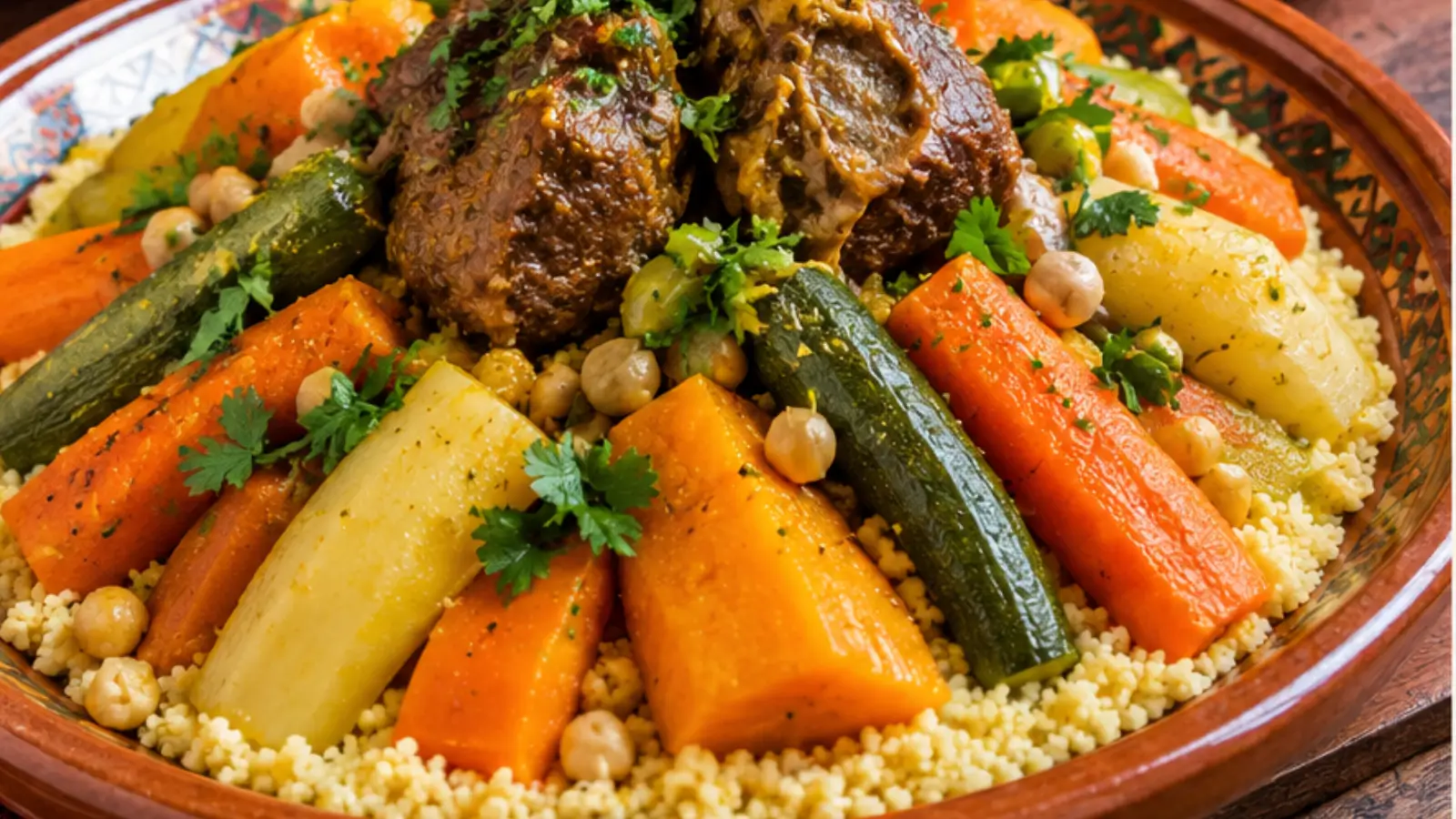
Moroccan couscous with meat and vegetables is one of the most beloved dishes in Moroccan cuisine. Traditionally served in a large communal bowl, this comforting meal brings together fluffy steamed couscous, tender meat, fresh vegetables, and a rich, aromatic broth seasoned with traditional Moroccan spices.
This recipe follows the traditional cooking method, in which the meat is first cooked in a pressure cooker, while the couscous is steamed separately several times to achieve a light and fluffy texture. The couscous is then served with the meat, vegetables, and flavorful broth.
Ingredients


For the couscous and meat
- 1 kg couscous grains (Moroccan couscous semolina)
- 1 kg lamb or goat meat, preferably bone-in
- 1 large onion
- 2 tomatoes
- 2 cups olive oil
- A small bunch of fresh coriander
- Salt, to taste
- Water, as needed
For the vegetables
- 500 g carrots
- 250 g red pumpkin
- 250 g zucchini
- 250 g turnips
- 250 g cabbage
- 1 hot pepper, optional
For the spices
- 1 tablespoon black pepper
- Turmeric, to taste
- Ground ginger, to taste
Note: Adjust the amount of spices and salt according to your taste.
How to Make Traditional Moroccan Couscous
Step 1: Cook the meat
Place the meat in a pressure cooker. Finely chop the onion and a small amount of fresh coriander, then add them to the meat.
Pour in the olive oil and add the salt, black pepper, turmeric, and ground ginger. Add approximately 500 ml of water and mix everything together.
Close the pressure cooker securely and cook for about 30 minutes, or until the meat is beginning to become tender.
Step 2: Prepare the vegetables
While the meat is cooking, peel the carrots and turnips. Wash all the vegetables thoroughly, including the pumpkin, zucchini, cabbage, and hot pepper.
Cut the vegetables into large pieces so they hold their shape during cooking.
Step 3: Cook the meat with the vegetables
After 30 minutes, carefully release the pressure according to the cooker’s instructions before opening it.
Transfer the meat and its cooking broth to a large cooking pot. Add all the prepared vegetables and pour in approximately 2 liters of boiling water.
Place the pot over medium heat and allow the meat and vegetables to simmer until everything is tender and the broth is rich and flavorful.
Step 4: Prepare the couscous grains
Place the couscous grains in a large traditional Moroccan clay bowl, known as a gsaa.
Drizzle with a little olive oil and gently rub the grains between your hands to separate them. Sprinkle with a little water and mix carefully to moisten the grains evenly.
Transfer the couscous to the top section of a couscoussier, the traditional steaming pot.
Place it over the pot containing the meat and vegetables. Make sure the steamer fits securely so the steam rises through the couscous rather than escaping around the sides.
Step 5: Steam the couscous three times
Allow the couscous to steam until the steam rises freely through the grains and spreads evenly throughout them.
Carefully transfer the couscous back into the large bowl. Sprinkle with water and gently mix to loosen the grains and distribute the moisture.
Return the couscous to the steamer and place it over the simmering broth for a second steaming.
Repeat this process once more for the third steaming, allowing the grains to become tender, light, and fluffy.
Be careful when handling the hot couscous and steam.
Step 6: Serve the Moroccan couscous
Once the couscous is ready, transfer it to a large serving bowl and spread it evenly.
Moisten the couscous with some of the hot broth, then arrange the cooked meat in the center. Place the vegetables around and over the meat, creating a traditional Moroccan presentation.
Serve the remaining broth separately so everyone can add more according to their preference.
Enjoy your homemade Moroccan couscous while it is hot!
Tips for the Best Moroccan Couscous
- Steam the couscous three times: This traditional technique helps produce a lighter, fluffier texture.
- Cut the vegetables into large pieces: This helps prevent them from breaking apart during cooking.
- Use fresh coriander: It adds a wonderful aroma to the broth.
- Moisten the grains gradually: Add water little by little to avoid making the couscous too wet.
- Serve in a traditional bowl: A large Moroccan serving bowl makes the dish especially inviting for family meals.
Frequently Asked Questions
What meat is best for Moroccan couscous?
Lamb and goat are both traditional choices. Bone-in cuts can add extra flavor to the broth.
Why is Moroccan couscous steamed three times?
Repeated steaming and gentle moistening help the grains cook evenly and develop a soft, fluffy texture.
What vegetables are used in Moroccan couscous?
This version includes carrots, red pumpkin, zucchini, turnips, cabbage, and hot pepper. Vegetable combinations can vary between Moroccan households and regions.
Can I prepare Moroccan couscous in advance?
You can prepare the vegetables and meat broth ahead of time. For the best texture, steam the couscous close to serving time and moisten it with hot broth just before serving.
Final Thoughts
Traditional Moroccan couscous with meat and vegetables is more than just a meal; it is a celebration of Moroccan culinary heritage and family traditions. With tender meat, seasonal vegetables, fragrant spices, and carefully steamed couscous, this recipe brings the warmth and authentic flavors of Morocco to your table.
Prepare this delicious dish for a family gathering, a Friday lunch, or any special occasion when you want to share a traditional Moroccan meal.